
Collection: Makita SDS Drill Range

A Makita SDS Drill is a useful bit of kit for tradespeople who regularly work with masonry, concrete and brick, particularly when the job calls for more impact power than a standard drill can offer. Whether you're looking for a lightweight cordless model for overhead installations or something with a little more punch for breaking through concrete, there's quite a bit to consider before settling on the right tool. The range below covers everything from everyday masonry drilling to more demanding site work, so you can find a model that suits the jobs you actually carry out.

Makita 18V sds drill shown in front of its teal plastic carrying case on a white background.

Find the Right Makita SDS Hammer Drill for Your Trade 

The kind of work you're doing, the materials you're drilling through, and the degree of mobility you require on a site are all important considerations when selecting a Makita SDS hammer drill. If you spend the majority of your day drilling smaller repairing holes, there's no reason to get a heavy-duty rotary hammer, just as an entry-level model might not be able to handle thick concrete on a frequent basis.

One of the benefits of the Makita SDS line is that its rotating hammers are designed to carry impact energy straight through the bit, allowing the tool to do more of the work rather than leaving you to push it through the material. After you've examined the needs of your job, you'll need to decide whether an 18V cordless model will suffice or if you should upgrade to a more powerful platform.

The Versatility of a Makita SDS 18V Drill

For tradespeople who are regularly moving between rooms, fitting frames or installing masonry anchors, a Makita SDS 18V Drill is often a practical place to start. Having a cordless tool means you're not constantly looking for a nearby power supply or having to work around trailing cables, which can make a real difference when you're moving between jobs on a busy site.

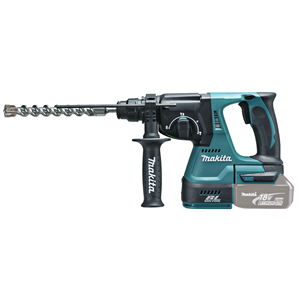
The Makita 18V DHR202Z Rotary Hammer Drill Body is a good option for general-purpose masonry drilling, offering a straightforward and durable solution for everyday site work. It also features a one-touch sliding chuck, making it easier to change between bits without losing too much time when moving from one task to the next.

However, if you're spending longer periods drilling or regularly working overhead, it's worth looking at what the Makita DHR242Z Brushless SDS Drill brings to the table. Its brushless motor is designed to run more efficiently, while the lighter construction makes it a more comfortable option for jobs where you're holding the drill above shoulder height or using it throughout the day. Better battery efficiency is another advantage, particularly when you're working through a number of fixings and don't want to keep stopping to change batteries.

Both models have their place, but the difference really comes down to how demanding your daily work is. For occasional masonry drilling, the DHR202Z offers a dependable option, whereas the DHR242Z is worth considering when longer runtimes, reduced weight and brushless performance are higher on your list.

Heavy-Duty Applications for Your Makita Hammer Drill

Of course, not every job involves drilling a handful of fixing holes. When you're working through thicker concrete, carrying out channeling or taking on larger drilling and breaking applications, you'll need a Makita Hammer Drill with enough impact energy to handle the workload.

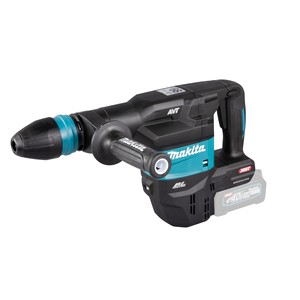
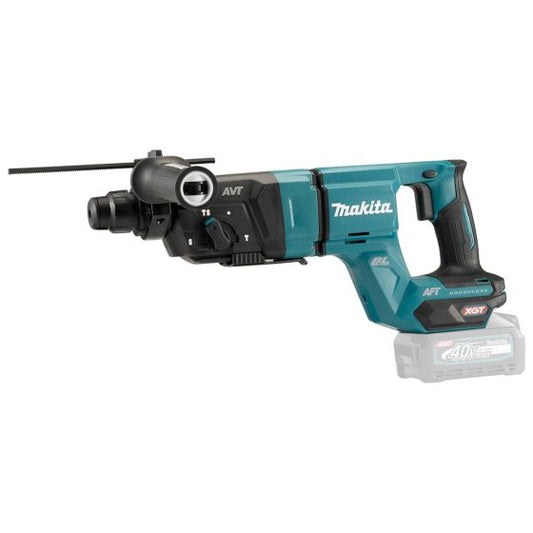
This is where the 40V XGT range becomes particularly useful, especially for groundworkers and fit-out teams who need a little more from their cordless equipment. The Makita HR007G 40v SDS Drill Body offers brushless performance on the XGT platform, making it a strong option for more demanding professional drilling and breaking applications. It's designed for the sort of work where a smaller 18V rotary hammer may start to feel underpowered.

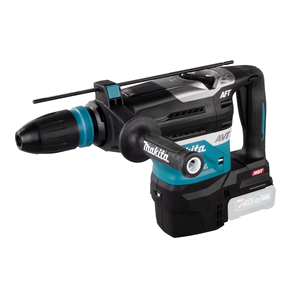
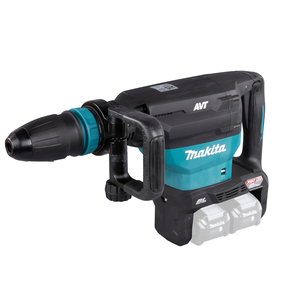
For heavier civil engineering work, there's also the Makita HR005GZ Rotary SDS Hammer Drill. The main difference here is its SDS Max fitting, which is designed for larger bits and more demanding applications where an SDS Plus model may not be suitable. So, if your work regularly involves heavy-duty demolition or larger diameter drilling, this is the sort of machine worth considering.

Comparing the Makita SDS Drill 18V and 40V Range

To make things a little easier, we've reviewed some of the most popular Makita rotary hammers below, detailing what each model is best suited for and how they differ in terms of power and chuck type. This should help you decide whether the Makita SDS Drill 18V model is worth considering or if the 40V XGT series is more suited to your needs.

ModelBest ForPower SupplyMotor TypeChuck Type
Makita DHR242ZOverhead tasks and long runtimes18V LXTBrushlessSDS Plus
Makita DHR202ZGeneral masonry and entry-level pro use18V LXTBrushedSDS Plus
Makita DHR264ZHeavy drilling using existing batteriesTwin 18V LXT (36V)BrushedInterchangeable
Makita HR007GSustained commercial breaking40V XGTBrushlessSDS Plus
Makita HR005GZExtreme demolition and coring40V XGTBrushlessSDS Max

FAQ’s

Which is the best Makita SDS drill?

There's no single Makita SDS Drill that's going to be the right choice for every trade, as it really depends on the materials you're working with and how regularly you're using it. For electricians and carpenters who need a reliable cordless rotary hammer for everyday masonry work, the Makita DHR242Z Brushless 18V is a good all-round option, particularly when weight and battery efficiency matter. On the other hand, if you're regularly working with thicker concrete or carrying out more demanding commercial work, the 40V HR007G is worth looking at for its additional power.

What are good SDS 18V LXT drills for drilling 8mm and 10mm diameter holes into engineering brick and concrete?

For repetitive 8mm and 10mm holes in engineering brick and concrete, the Makita DHR242Z is a model worth considering. Its brushless motor offers efficient performance and better battery utilisation, which can be useful when you're drilling a number of holes throughout the day. The SDS Plus fitting also makes it straightforward to change between compatible masonry bits, while the rotary hammer action helps you work through tougher materials without having to apply unnecessary pressure.

Which compact Makita 18V combi drill should I get for a home workshop?

Although it lacks a metal gear housing, the 485's power is comparable to that of the 484. Its weight is between that of the 484 and the 487. It is important to note that many combi drills are not designed for use with powerful hammer drills. It is preferable to use an SDS for masonry and a drill for metal, wood, and driving.

Which 40V XGT SDS+ drills small holes fastest?

If you're looking for a 40V XGT SDS+ drill for smaller diameter holes, the MAKITA HR007G is worth considering. Its brushless motor and 40V platform provide the impact performance needed for demanding concrete drilling, although the bit you're using and the material itself will also have an influence on drilling speed. For tradespeople who regularly work with concrete and need a more powerful cordless option, it offers a step up from the standard 18V range.

Which 18V Makita hammer drill is the best?

For most everyday applications, the MAKITA DHR242Z is a strong all-round choice within the 18V LXT range, particularly if you're looking for brushless performance and a lighter tool for regular site work. However, if you need something with more power and already have a collection of 18V LXT batteries, the MAKITA DHR264Z uses two batteries to deliver 36V performance. It's worth comparing both models against the type of drilling you regularly carry out before deciding which one makes more sense.

Does Makita have a battery-powered hammer?

Yes, Makita has a fairly extensive range of cordless rotary hammers, covering everything from smaller everyday masonry jobs to heavier demolition work. The 18V LXT range is a practical option for general site use, while the Twin 18V models offer 36V performance using two LXT batteries. For more demanding applications, the 40V XGT platform gives tradespeople another option when additional impact power is needed without having to rely on a mains-powered machine.

I’m planning to build some wooden furniture + all the home usage usually necessary when having your first home. I’m a bit lost with the 18v combi drill choices, all I want is something that will last long and be great across these situations.

Basic house maintenance and furniture assembly don't require a pricey, heavy-duty combi drill. For household use, a dependable, mid-range brushless model such as the DHP484 is ideal. Purchasing a low-cost corded SDS drill is frequently preferable to making a combi drill perform jobs for which it was not intended.

What's the most powerful SDS drill in the Makita LXT range?

Within the Makita 18V LXT range, the Twin 18V models offer the highest voltage output by using two 18V batteries together to deliver 36V performance. The MAKITA DHR264Z Twin 18V Rotary Hammer Drill is one option for tradespeople who need more power for heavier drilling applications but want to continue using their existing LXT batteries. Beyond the LXT platform, Makita's 40V XGT range provides another step up for those taking on more demanding drilling and breaking work.

Explore the full collection of Makita Drills & Drivers